

EcoVadis: The International Sustainability Assessment
EcoVadis is a global platform that assesses companies' sustainability performance. Over 150,000 companies use the system to screen their suppliers or to have themselves assessed.
How Does an EcoVadis Assessment Work?
The process begins with an online questionnaire. This is tailored to your sector, company size, and location. You answer questions across four themes:
- Environment: energy consumption, emissions, waste management, and product impact
- Labor & Human Rights: safety, working conditions, diversity, and compliance with labor laws
- Ethics: anti-corruption policy, fair competition, and responsible information management
- Sustainable Procurement: how you select suppliers based on sustainability
After completing the questionnaire, you upload supporting documents such as policy documents, certificates, and reports. EcoVadis analysts assess your submission for 6 to 8 weeks. They review your policies, concrete actions, and measurable results.
Your Score and Medal
You receive a total score from 0 to 100, plus separate scores per theme. If you score among the top percentages worldwide, you'll receive a medal:
- Platinum: top 1% (score 78-100)
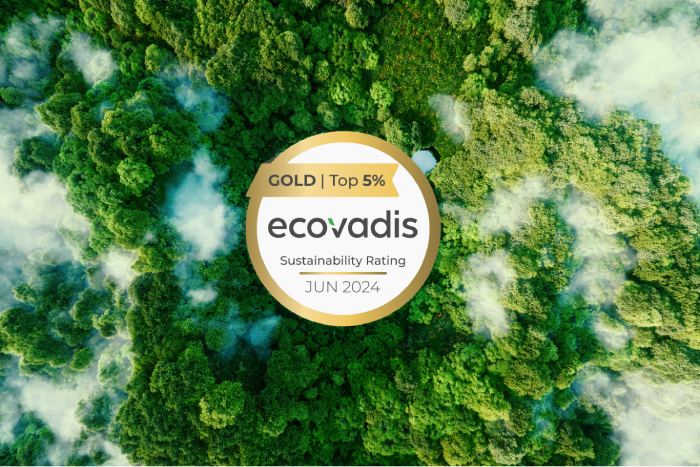
- Gold: top 5% (score 70-77)
- Silver: top 25% (score 59-69)
- Bronze: top 35% (score 50-58)
Your scorecard remains valid for 12 months. After that, you request a new assessment to demonstrate your progress.
Who is EcoVadis for?
Large international companies, but also an increasing number of medium-sized organizations, use EcoVadis to assess their suppliers. Do you work as a supplier for multinationals in sectors such as food, chemicals, automotive, or manufacturing? Then it's highly likely that your clients will ask for an EcoVadis score. The platform helps you demonstrate your sustainability efforts to multiple clients with a single assessment.
Read more about an EcoVadis process
CO2 Performance Ladder: management system for CO2 reduction
The CO2 Performance Ladder goes a step further than just assessment. You build a complete CO2 management system within your organization. This system originated in the Netherlands and has been in use since 2009. It now counts over 8,000 certified companies in the Netherlands and nearly 100 certificates (covering over 300 companies) in Belgium.
The new structure: from 5 levels to 4 tiers
The CO2 Performance Ladder has recently been updated. While Handbook 3.1 uses five levels, Handbook 4.0 switches to four tiers. The old levels 1-3 now collectively form Tier 1, while levels 4 and 5 become Tier 2. The new Tiers 3 and 4 set higher requirements than the former highest level.
How to work with the CO2 Performance Ladder
The system focuses on continuously improving your CO2 performance:
- Establish CO2 footprint: You precisely map out how much CO2 you emit (scope 1, 2 and, for higher tiers, also scope 3)
- Set reduction targets: You set concrete goals to reduce your emissions
- Implement measures: You carry out actions to achieve these goals
- Communicate: You share your progress with employees and external parties
- Collaboration: At higher levels, you collaborate within the supply chain on CO2 reduction
An independent certifying body annually verifies if your system is effective and if you are indeed reducing CO2. Upon a positive audit, you receive a certificate valid for three years, subject to annual checks.
View the list of accredited certifying bodies here.
Benefits in Tenders
The CO2 Performance Ladder offers tangible advantages in tenders. Contracting authorities determine the award advantage per level themselves. This can range from a few percentage points to a 10% notional discount on your bid price. The higher your level, the greater the advantage. This can make the difference in winning contracts, especially in sectors such as construction, infrastructure, technical services, or transport.
Increasingly, governments are requiring a CO2 Performance Ladder certificate for tenders. The Flemish government will structurally integrate the ladder into infrastructure projects from 2025, but other public institutions and public-private partnerships also use the ladder to assess companies. This development makes the system particularly relevant for companies working with governments.
Read more about the CO2 Performance Ladder
What do both systems have in common?
Both EcoVadis and the CO2 Performance Ladder help you to:
- Gain insight into your sustainability performance
- Identify areas for improvement
- Make your progress measurable
- Strengthen your position with customers who value sustainability
- Save costs by working more efficiently
The main difference? EcoVadis assesses your current situation across multiple sustainability themes. The CO2 Performance Ladder specifically focuses on CO2 reduction and requires you to establish a functioning management system with continuous improvement.
Which framework suits your company?
Choose EcoVadis if you:
- You have international clients who request an EcoVadis score
- You want a broad sustainability assessment (not just CO2)
- You quickly need a recognized score for commercial purposes
- You are a supplier in international supply chains
Choose the CO2 Performance Ladder if you:
- Regularly bid on (government) tenders
- Want to establish a structured approach to CO2 reduction
- Want to gain a competitive advantage in tenders
- Are active in construction, infrastructure, technical services, or transport
Getting started with the right framework
Implementing a sustainability framework requires time and attention. With the right approach, you can set up a system that adds value to your organization – from cost savings to new commercial opportunities.
Unsure which framework is the best fit? Or do you need help with implementation? We know both systems inside out and are happy to help you get started. From a quick scan to full guidance – we provide an approach that matches your ambitions and capabilities.
Ready to get started?
Contact us for advice on the best sustainability strategy for your organization.




.svg)
